

Brian Framson on 15 Years of Citrus America: Why You Can’t Fake Fresh and Why Integrity Is the Difference
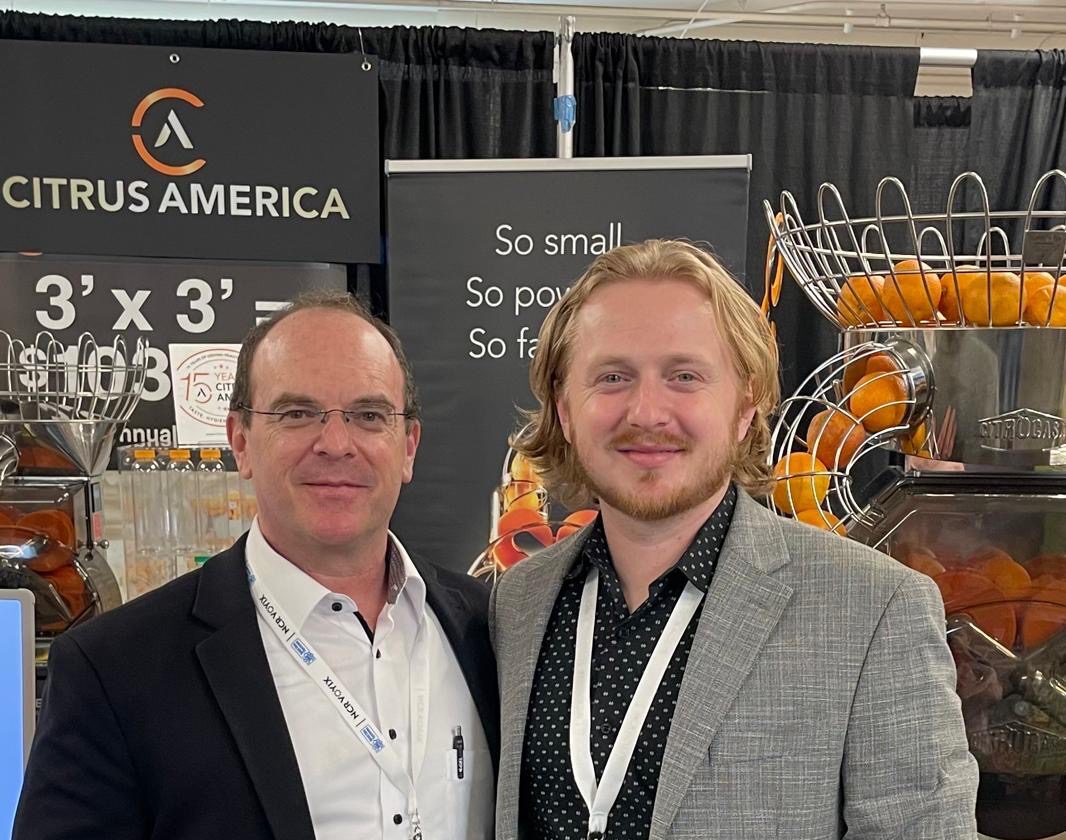
When Brian Framson founded Citrus America in January 2011 with his father, Ron, the idea wasn’t simply to bring another piece of equipment to market.
It was to elevate an experience, and ultimately, to build a system that delivers what he calls “Healthy Profits.
At the center of that philosophy is a simple but non-negotiable framework: T.H.E., which stands for Taste, Hygiene, and Efficiency.
Because in Brian’s view, fresh juice only works as a business when all three are executed at a high level.
At the time, Brian was living in Europe, most notably Vienna, Austria, where fresh juice wasn’t a trend or a talking point. It was simply part of daily life. Citrus was squeezed on demand, and in grocery stores. Customers could see it happening, or even make it themselves in certain stores. They could taste the difference. And the systems behind it worked reliably, day after day.
But back in Florida, where his father lived, a state long associated with citrus, Brian was surprised by how difficult it was to find fresh juice programs that were consistently working across multiple locations.
“I wasn’t looking to reinvent juice,” Brian says. “I was looking to bring over something that was already working, and make it work here. The original vision was to change the way Americans drink and perceive fresh orange juice. It then expanded to include other citrus juices.”
That perspective would become the foundation of Citrus America: combining proven European innovation with the operational rigor, service infrastructure, and strategic thinking required to succeed in the U.S. market.
For Brian, integrity isn’t a marketing concept. It’s something that was instilled early.
He traces it back to his parents. And today, as Citrus America has become a multi-generational business, he sees it as something he’s responsible for passing on.
That throughline – between what you say, what you deliver, and how you operate – has become inseparable from how he thinks about both “fresh” and business itself.
A Partnership Built on Complementary Strengths
Brian’s partnership with his father worked precisely because their strengths were different.
Brian brought global exposure, strategic insight, and corporate experience shaped by years inside large multinational companies. Ron brought something just as essential: deep small-business instinct and operational discipline.
“Ron had run businesses his entire life,” Brian recalls. “He understood the realities, such as cash flow, service, and customer relationships…all the things that don’t show up in a pitch deck.”
While Brian was still based in Europe, Ron became the boots on the ground in the U.S., visiting stores, observing operations, and talking directly with operators. What he saw was consistent: juicing equipment that looked promising on paper but failed in practice.
“He’d find juicing equipment in the market, but so often it wasn’t running,” Brian says. “Parts weren’t available. Service was inconsistent. The intent was there, but the execution wasn’t.”
Rather than view that gap as a liability, Brian and Ron saw it as an opening.
“What we recognized early on,” Framson explains, “was that consumers already wanted fresh. Operators wanted to offer it. What was missing was a system that actually supported them.”
Building What the Market Wasn’t Ready For…Yet
The early years of Citrus America were not without resistance. While consumer interest in fresh juice was already present, the infrastructure to support it consistently often was not.
Many operators liked the idea of freshness but underestimated what it took to execute it well. Labor constraints, training gaps, maintenance concerns, and cost sensitivity frequently stood in the way. Some retailers were tainted by negative past experiences – they tried juicing only to abandon it when their equipment failed, service lagged, or consistency proved difficult to maintain.
Mr. Pichler, Citrocasa’s founder, explained to Brian from the very beginning, that people’s prior negative experiences with poor quality citrus juicing equipment was a hurdle he would have to overcome. “Mr. Pichler was a bit of a mentor on juicing and sales topics,” Brian explains, “he warned me of this issue.”
“There was a disconnect,” Brian continues. “People wanted the outcome, but not everyone was prepared for the operational commitment required to deliver it. Invest in good equipment and in training.”
Many of the barriers Brian encounters today aren’t new. They’re just repeated.
Labor. Space. Upfront investment.
But he sees them differently.
Yes, a commercial juicer is an investment. But in many cases, the return happens faster than expected.
Many operators see payback in under a year, and often much sooner.
From Brian’s perspective, anything with that kind of return isn’t a cost problem. It’s a prioritization decision.
Space is always limited. But the question isn’t whether space exists – it’s how it’s being used.
If a program drives revenue, increases product turns, and improves margins, it earns its place.
Labor is the most common objection, and often the most misunderstood.
Every operator has labor. The real question is where it’s allocated.
Programs that drive traffic, increase frequency, and generate strong margins justify that allocation.
Another major hurdle is perception.
Many operators believe commercial juicing programs don’t work – often because they’ve tried before and failed. Some people remember equipment from 30 years ago that took an hour to clean and still wasn’t clean. Some just had a terrible experience with equipment quality or support.
Brian traces this back to early conversations with Citrocasa’s founder, who warned him that poor commercial citrus juicers and inconsistent execution had already created skepticism in the market.
Overcoming that history has been just as important as building the future.
Rather than lowering standards to meet the market where it was, Citrus America focused on building competencies that could support operators over the long term. That meant investing in durable commercial juicing equipment, reliable service, and education around what sustainable freshness actually requires.
“We learned that growth for the sake of growth wasn’t the goal,” Brian explains. “If a program couldn’t be supported properly, it wasn’t going to help anyone in the long run. People thought they wanted cheaper equipment, but what they really wanted was a successful and profitable citrus juicing program… they just didn’t know it yet.”
Over time, as consumer expectations evolved and operators adapted, what once felt like friction became differentiation, reinforcing Citrus America’s role as a partner built for longevity, not shortcuts.
The Framework Behind “Healthy Profits”
Out of that friction came clarity.
The focus on Taste, Hygiene, and Efficiency didn’t start as a slogan.
It came from a realization early in the company’s second year.
“There were so many features and advantages with our equipment, we couldn’t effectively communicate it.” Framson saw that Citrus America was overwhelming customers with technical details, such as features, specs, comparisons, while missing something more important: clarity.
Drawing on his background in corporate environments, he began distilling everything down to what actually mattered.
That’s when the concept of “Healthy Profits” took shape.
To Brian, “Healthy Profits” means three things happening at once.
The consumer receives a genuinely fresh, high-quality product.
The operator strengthens their brand, increases traffic, and builds customer loyalty.
The business generates strong, sustainable financial returns.
“Good for the consumer, good for the company, and good for the shareholders: a real win-win-win.”
At the center of that is T.H.E.
First, Taste.
If the product doesn’t deliver immediately, nothing else matters. Fresh juice has to taste noticeably better – cleaner, brighter, and with some “wow!”
Next, Hygiene.
Trust is built through what customers can’t ignore. Cleanliness, food safety, and transparency all determine whether a product feels credible.
And last, Efficiency.
Even great products fail if they’re difficult to execute. Speed, reliability, and ease of operation determine whether a program scales or disappears.
Without all three, the model breaks. It HAS to taste great. It HAS to be safe. It HAS to be profitable.
By committing to all three, operators don’t just offer fresh juice, but they build programs that perform, scale, and deliver consistent returns.
Built with Purpose, Engineered for Performance
That commitment showed up not just in philosophy, but in how the citrus juicers itself are built.
Framson has been clear that durability is not a cosmetic choice, but an operational one. Citrus America’s commercial juicers are more robust than any other commercial juicer on the market. The beautiful citrus presses use significantly more stainless steel and layered construction than any alternatives on the market, not just to look impressive, but to perform consistently under real-world conditions.
Framson was impressed with Citrocasa’s commitment to innovation and quality. Again, Framson reflects back on some of the wisdom Mr. Pichler shared with him, “Mr. Framson, Pichler would explain in formal German, "there are many mediocre, or even bad, pieces of juicing equipment people can buy, but there’s only one great juicer: and that’s Citrocasa.”
For Brian, build quality isn’t about overengineering; it’s about uptime, serviceability, and respecting the realities operators face every day. He invested a lot of time in ensuring that any commercial citrus juicing equipment vendors he selected shared the same philosophy.
Defining “Fresh” Through Actions, Not Words
When Citrus America launched, Framson thought the word “fresh” still carried a fairly intuitive meaning: made today, made on demand, made in front of you.
Framson realized that definition had been blurred across the food industry. Instead of trying to redefine the word, Brian focused on demonstrating it.
Over time, he also came to see that “fresh” isn’t just a product claim. It’s a test of integrity.
Because when something is presented as fresh but isn’t, it’s not just a quality issue. It’s a trust issue.
That disconnect shows up more often than most consumers realize. Products designed to look like they’re made in-store but are actually produced in facilities miles away. Menus that promise “fresh juice” while serving something poured from a bottle.
In Brian’s view, this is what “fake fresh” really means – and why it matters. It’s not just misleading. It erodes trust, both in the product and in the brand behind it. In other words, Framson’s logic, it doesn’t just erode trust in the branded product a consumer is drinking, rather also in the establishment that’s serving it.
“Words only matter if they’re backed up by actions,” he says.
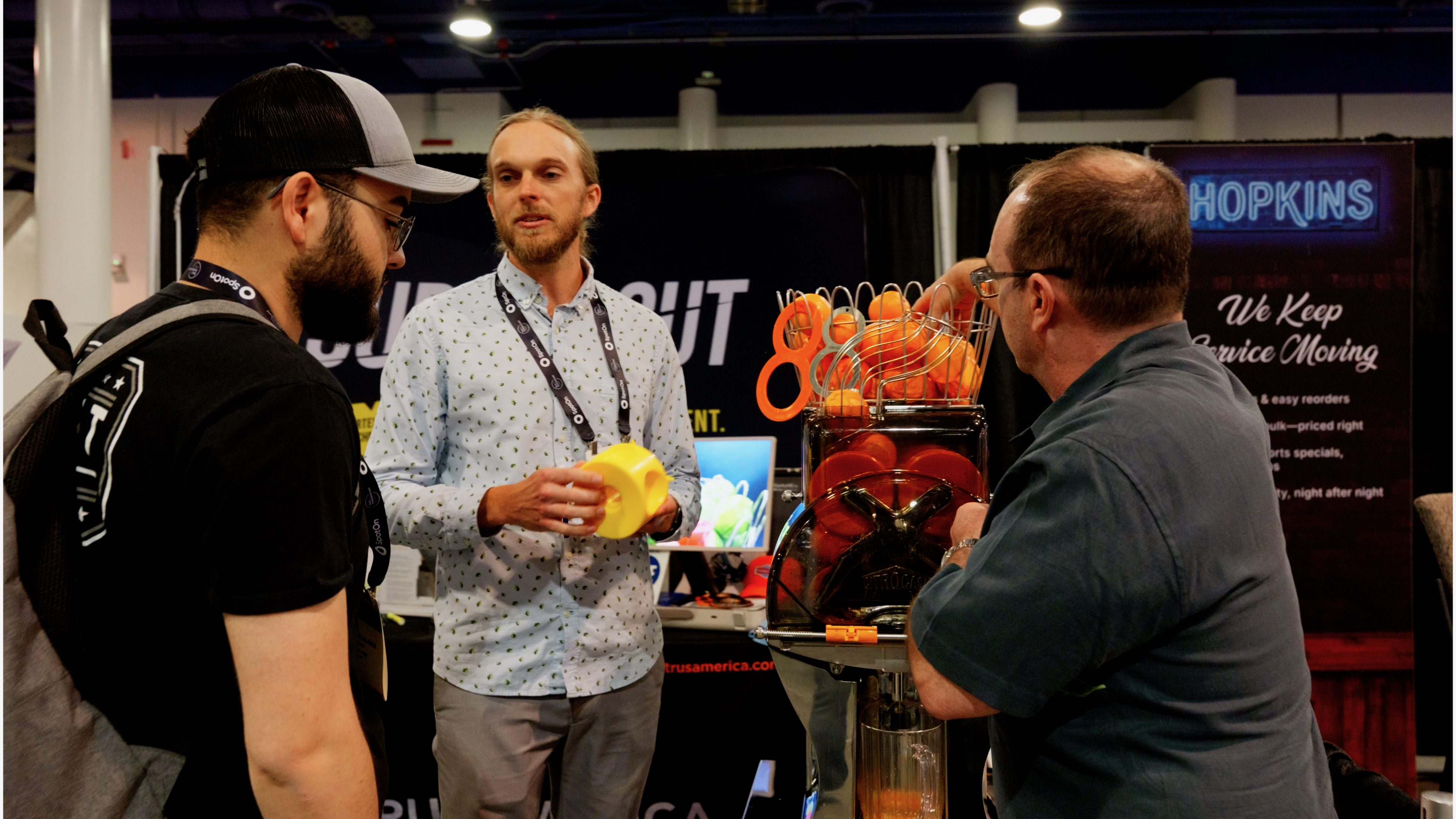
From the beginning, Citrus America focused on creating visible proof points: commercial juicers that performed consistently, training that empowered staff, and in-store experiences that allowed consumers to see freshness happening in real time.
“If a customer can watch juice being squeezed, or press the button themselves in a grocery store, there’s no confusion,” Framson explains. “Fresh becomes self-evident.”
This philosophy became even more relevant as consumers grew more aware of ultra-processed foods, UPFs in industry jargon, and the gap between how products are marketed and how they’re actually made. Brian has been clear that processing itself isn’t the issue.
He openly acknowledges enjoying processed foods at times. What concerns him is when heavily processed products are positioned as something they’re not – particularly when consumers are actively trying to make better-informed choices.
Research, media coverage, and consumer self-education have all contributed to this shift. Customers are reading labels. They are questioning claims. And once they taste truly fresh products, many are reluctant to go back.
For Brian, this isn’t about fear or restriction. It’s about transparency and empowerment.
The phrase “You can’t fake fresh” isn’t just about a product – it’s about honesty in how that product is represented.
“‘You can’t fake fresh’ captures this sentiment,” Framson explains. “Some companies that fake fresh products seem to be intentionally misleading the customer and, in my opinion, are destroying trust and devaluing their brand. But they’re doing it because they know that consumers want fresh and are willing to pay for fresh. This also ties into my thoughts on integrity.”
“When operators invest in authenticity, consumers respond,” he says. “They ask questions. They taste the difference. When operators promise a product with certain characteristics and deliver on that promise, it builds their brand. If you promise fresh, then make it fresh.”
Lessons That Shaped a Stronger Company
Looking back over 15 years, Brian is candid about what surprised him, and what ultimately strengthened the business.
First, geography.
“A product that succeeds overseas still has to be adapted thoughtfully for the U.S.,” he says. “Scale, culture, labor dynamics…all of it matters.”
Second, sales and communication.
“A great product doesn’t sell itself,” Brian says. “You need a clear message, the right customer focus, and a sales organization that understands value, not just price.”
And third: people.
“Every business is a people business,” he says. “When you build your own company, you’re responsible for culture, hiring, training – everything.”
Those lessons weren’t always easy, but they shaped Citrus America into a more disciplined, resilient organization. There were moments when growth had to be slowed intentionally, not because demand wasn’t there, but because quality had to come first.
“We learned when to push growth and when to pause,” Brian says. “Sometimes slowing down was the best way to protect quality and build trust.”
More Than Just an Equipment Vendor, But A Partner in Differentiation
More than anything, Brian wants operators to rethink what fresh juice represents.
Not as a niche offering, or an add-on. But as a strategic lever for differentiation, customer experience, and long-term growth.
From day one, Brian was clear that Citrus America wouldn’t succeed by being a transactional vendor.
“In every industry I worked in, the after-sales experience mattered just as much as the product,” he says. “If something goes wrong, how you respond defines the relationship.”
That philosophy led Citrus America to invest heavily in service, training, and long-term partnerships – an approach that increasingly positioned the company as a strategic partner, not just a supplier.
Over time, Citrus America began helping grocery retailers and foodservice operators think beyond individual products and toward differentiation.
In highly competitive environments such as grocery, hospitality, bars, restaurants, airline lounges, Framson has seen firsthand how operators struggle when they lack a clear point of distinction. Citrus America helps address that by enabling operators to make fresh products on-site, rather than relying on packaged or processed alternatives.
Fresh juice programs, upgraded beverage offerings, and signature experiences become tangible ways for operators to stand out, not through marketing claims, but through what customers can see, taste, and experience.
“Signature products and positive experiences are what helps grocery stores and food service operators differentiate themselves in a competitive market,” Brian says. “Our goal is to help customers stand out. And when they succeed, we succeed.”
Consumer Trust and a New Appreciation for Authenticity
One of the most encouraging shifts Brian has observed is a growing consumer demand for authenticity rather than perfection.
Customers aren’t necessarily demanding that everything be fresh all the time. What they want is clarity, honesty, and transparency. They want to know what they’re consuming, where the product is sourced, and what ingredients are being used. Consumers want the option to choose better when it matters to them: to make informed decisions.
This is especially true in categories like juice and beverages, where taste, health perception, and freshness intersect. Once consumers experience juice made with real citrus, or cocktails made with real, fresh ingredients, it changes expectations.
Citrus America’s role, Brian explains, is to make those expectations achievable at scale.
Framson’s experience with big corporations give him a very different perspective from many other equipment providers, especially those active in the food & beverage segment. “First of all,” Brian explains, “all of our customers, big and small, deserve quality equipment and after sales support. But we have to be able to support major companies that have hundreds or even thousands of locations.”
“We help turn good intentions into operational reality no matter how many locations they have,” he says.
It’s All In The Family
Today, Citrus America is firmly a multi-generational business, with Brian’s children, Miriam and Jacob, playing active roles. Brian’s wife, Elke, has also been involved in the business over the years.
“That changes how you think,” Brian says. “You start making decisions with a longer horizon.”
Miriam, the company’s Vice President of Operations, brings a structured, results-oriented mindset. Jacob, Outside Sales Representative, is deeply hands-on and sales-driven.
Together, both have added new perspectives and accountability to the business.
“They challenge me,” Brian says. “And they make the company better.”
Their involvement reinforces Brian’s belief that leadership is not static. It evolves with time, experience, and trust.
“You listen,” he says. “You adapt.”

Looking Ahead Towards Innovation, Impact, and Influence
As Citrus America looks toward its next chapter, Brian is energized by where the industry is heading.
He sees growth among operators who are clear about who they are, whether they focus on efficiency, specialty offerings, or premium experiences. What they share is intentionality.
“Differentiation is no longer optional,” Brian says. “And freshness, when done right, is one of the most compelling ways to achieve it.”
For Citrus America, that means continuing to innovate, not just in equipment, but in how operators think about food and beverage as a whole. It means helping customers build trust, loyalty, and memorable experiences in an increasingly crowded marketplace.
At its core, Citrus America’s role is simple: help operators turn intention into execution.
Because when fresh is done right, and backed by integrity, it doesn’t just elevate the experience.
It drives the business - that’s Healthy Profits.
“I don’t want us to be known as the ‘juice company,’” Brian says. “I want us to be known as a partner in better food and beverage experiences.”
When asked what he hopes Citrus America will ultimately be known for, Brian doesn’t lead with revenue or scale.
“I hope we’re remembered for helping people do things the right way,” he says. “For raising standards. For making businesses stronger and customer experiences better. For helping our customers earn Healthy Profits.”
And for founders building values-driven companies, his advice remains grounded and optimistic.
“Know why you’re doing this,” he says. “Build something you’re proud of. And remember, integrity compounds over time.”
Fifteen years in, Framson and Citrus America continue to raise expectations, not through noise or confrontation, but through consistency, clarity, and genuine care for their customers and the public they serve.
About Us
About Citrus America – Citrus America specializes in high-performance commercial juicing solutions and programs designed to help grocery stores, foodservice operations, and retailers differentiate their offerings with fresh, high-quality products. With a focus on safety, efficiency, and innovation, Citrus America empowers businesses to create signature fresh programs that drive revenue, increase customer engagement, and enhance brand value.